Which Esports Statistics Site Is Best for Live Results, Roster Changes, and Match VODs
No single esports statistics site is best at every task. A Counter-Strike viewer looking for round-by-round numbers needs something different from a League of Legends analyst studying historical drafts, while someone following several games may care more about roster changes, qualifiers, VOD links, and notifications than deep statistics for one title.
As of August 2026, the practical split is fairly clear. HLTV is the strongest specialist choice for Counter-Strike 2, VLR is highly effective for VALORANT, Games of Legends is useful for League of Legends statistical research, Strafe is particularly convenient for cross-game notifications, and Liquipedia provides the broadest combination of tournament coverage, roster history, schedules, streams, and VOD references.
The best choice therefore depends on what information must be accurate and how quickly it is needed.

Live Result Speed and Confirmation Status
A live score should be evaluated against the official broadcast rather than another statistics site.
HLTV explicitly describes its service as providing real-time Counter-Strike scores alongside schedules, results, player statistics, and team statistics. Its current match page continuously lists live CS2 matches from major events and smaller competitions.
Strafe similarly advertises real-time match data, including live objectives, rounds, and match results across its supported titles. VLR exposes current VALORANT results and match status directly on its homepage and individual match pages, while Riot’s official VALORANT Esports site remains the stronger confirmation source when a final VCT result is disputed.
These services do not publish a universal guarantee such as “scores will always update within three seconds.” A useful test is therefore based on timestamps.
During one match, record:
| Event | Official broadcast | Stats site | Difference |
| Map begins | 19:00:00 | 19:00:07 | +7 sec |
| Score becomes 5–3 | 19:12:20 | 19:12:26 | +6 sec |
| Map result confirmed | 19:34:10 | 19:34:19 | +9 sec |
| Series result confirmed | 20:41:03 | 20:41:14 | +11 sec |
Run the same test several times. A site may display kills quickly during one event but take longer to finalize a corrected map result. Fast provisional data and reliable final data are separate qualities. For Riot competitions, Riot’s official Competitive Operations systems and esports sites provide the authoritative current roster and competition framework. Third-party sites remain more convenient for browsing and analysis, but an official organizer should settle a disputed result.
Game and Competition Coverage
Liquipedia has the clear advantage when the reader follows more than one game. Its current data service describes a database exceeding 150,000 tournaments and 3 million matches. The site is divided across a large range of esports rather than concentrating on one title.
Breadth also extends below top-tier professional leagues. Liquipedia currently has dedicated records for qualifiers, women’s competitions, and lower-tier events in games including Counter-Strike, VALORANT, PUBG, PUBG Mobile, Mobile Legends, Teamfight Tactics, and others. That is important because “number of games supported” is a poor metric by itself. Coverage should instead be recorded like this:
| Competition level | Event listed? | Match score | Player stats | Roster | VOD/stream |
| Major international event | Yes | Detailed | Detailed | Yes | Yes |
| Regional league | Yes | Detailed | Varies | Yes | Usually |
| Tier-2 league | Yes | Basic/Detailed | Varies | Yes | Varies |
| Open qualifier | Yes/No | Often basic | Limited | Varies | Varies |
| Women’s circuit | Yes/No | Varies | Varies | Varies | Varies |
| Amateur event | Limited | Limited | Limited | Limited | Limited |
HLTV is intentionally narrower. It describes itself as a Counter-Strike publication and its statistical database contains CS2 and historical CS material with extensive filters for events, rankings, maps, dates, and match types. VLR is similarly specialized around VALORANT. Games of Legends focuses on League of Legends and maintains tournament-level statistical records including game duration, kills, patches, team performance, and historical match lists.
Strafe sits between the two approaches. Its current service covers major titles including Counter-Strike, League of Legends, Dota 2, VALORANT, Rocket League, Rainbow Six, Call of Duty and others, with rankings and live match tracking across multiple games.
Team Rebrands and Roster History
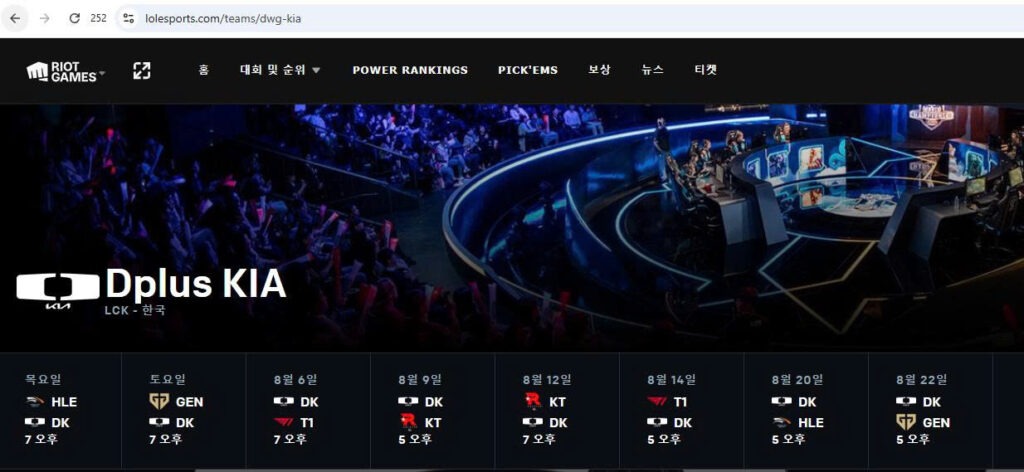
Roster history is one area where Liquipedia and specialist databases become more useful than a simple live-score application. Liquipedia team-page structures include active rosters, former players, organizational histories, and dated timelines. Its current templates support transfer histories that can automatically generate former squads and roster-change timelines, with references attached to the underlying changes.
For VALORANT, Liquipedia’s team-page system specifically uses transfer-history data to create roster timelines. VLR also provides dedicated Roster Transfers & Transactions pages. These records show join and leave dates and, in many cases, include a reference to the announcement used to support the change. Current Team Secret records, for example, attach dated transactions to the team’s announcement source.
The distinction between a database record and an official registration should remain clear. Liquipedia and VLR are third-party resources. Riot’s Global Contract Database is the official source for current League of Legends and VALORANT player and coaching affiliations covered by that system, including contract information.
A practical roster verification order is:
third-party roster history → cited transfer announcement → current official league registration
This becomes especially valuable after acquisitions or name changes. A team page may preserve earlier organization history while the league registration confirms who is legally on the current competitive roster.
Match Pages, Map Statistics, and VOD Connections
The quality of a statistics site becomes much more apparent after opening an individual match. HLTV match pages can combine series results, maps, lineups, detailed statistics, past matches, stream links, demos, and VOD navigation. Current 2026 match pages continue to expose downloadable demos where available and VOD links for supported matches. Its Major match portal also states that individual match pages provide stream links for live viewing.
For Counter-Strike analysis, that close connection between result and map data is difficult for a general-purpose site to match. VLR follows a similar model for VALORANT. Current match pages display series status, map vetoes, patch information, maps/statistics, and VOD sections when recordings are available. Lower-tier matches may explicitly state that VODs are unavailable rather than pretending an archive exists.
Liquipedia’s official mobile application advertises match information including drafts, map scores, streams, and VODs, making it more useful when following several esports in one place. Its League of Legends MatchPage system can also hold deeper details such as draft order, head-to-head information, player performance and match duration.
A VOD link should still be tested.
Record:
link present → official broadcaster? → playback works? → region accessible? → full match or highlight?
A statistics site that keeps pointing to a deleted Twitch archive or geo-blocked video should receive a lower freshness score even if the statistical record itself remains correct.
Match and Team Notifications
Notification needs are different from statistics needs. Strafe is built strongly around following teams, players, tournaments, and scheduled games. It supports customized alerts for pre-match activity, match start, and final results. Its App Store listing also includes match notifications and video highlights across several esports.
HLTV provides a more specialized version for Counter-Strike. Its current official app supports personalized notifications when favorite teams go live, and recent versions include a spoiler-free mode that can hide individual match results. VLR provides a particularly simple spoiler control on the website itself: the current interface includes a Spoilers: ON/HIDDEN option. citeturn399042search10 Riot’s official VALORANT schedule similarly hides selected scores behind Click to Reveal, which is useful for replay viewers who do not want results disclosed immediately. citeturn739209search6
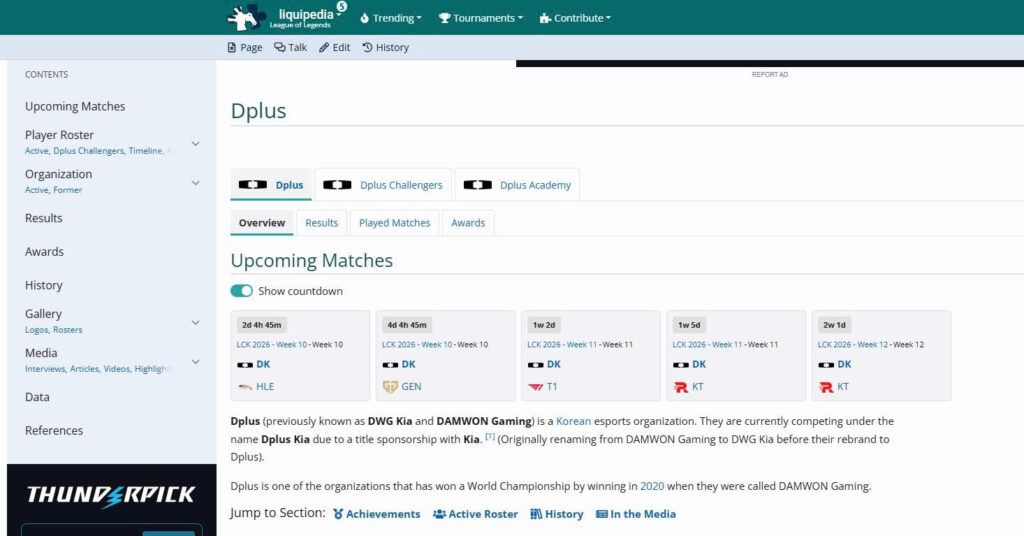
Liquipedia’s mobile app allows users to follow teams, players, and tournaments for easier access to their schedules and results. A real notification test should record:
| Notification | Enabled? | Arrived? | Spoiler risk |
| Match starts in 15 min | Yes | Time recorded | Low |
| Match goes live | Yes | Time recorded | Low |
| Roster change | Varies | Time recorded | Medium |
| Map result | Varies | Time recorded | High |
| Final series result | Yes | Time recorded | High |
If you usually watch replays, disabling result notifications is often more important than receiving the fastest live update.
Advertising, Paid Access, and Data Availability
The free-versus-paid difference varies considerably. HLTV makes its main results, schedules, team information and detailed Counter-Strike statistics available through its public site and app. Its business model includes commercial content and advertising rather than a general paid subscription required to unlock the core statistics database. VLR’s match pages are also publicly accessible, though commercial and betting sections can appear alongside match information. The core VALORANT match and statistical pages used in this comparison do not require a paid statistics subscription.
Games of Legends provides substantial League of Legends data for free but explicitly promotes Patreon support for an ad-free experience, while some pages identify Premium features as patron-only. Liquipedia’s mobile app contains advertising and currently lists an in-app No ads purchase. citeturn417821search9 Its data API is a separate matter. Liquipedia currently restricts free API access to defined educational, non-commercial public, or community-development cases, while commercial and scalable access uses paid arrangements.
This makes the user split fairly simple.
Casual viewer
Needs:
schedule → live score → final result → VOD
The normal free web/app experience is usually enough.
Record analyst
Needs:
historical matches → map/game statistics → roster dates → filters → structured exports/API
The choice becomes more specialized, and an API or premium statistical service may become relevant.
Site Selection by Use Case
For Counter-Strike, HLTV remains the most complete single-purpose choice. Its combination of live scores, historical match filtering, team/player statistics, demos, VOD links, rankings and notifications is unusually deep because the whole service is built around one esport. For VALORANT, VLR provides an efficient combination of match schedules, map statistics, VOD references and dated roster transactions. Riot’s official VALORANT Esports pages should be used as the confirmation source for official VCT schedules and results.
For League of Legends statistical analysis, Games of Legends is useful when match, tournament and historical performance data matter more than multi-game coverage. Riot’s official GCD remains the stronger current roster authority. For notifications across several games, Strafe is one of the more convenient choices because following teams and tournaments and receiving match-stage alerts are central product functions.
For cross-game tournament research, roster history, qualifiers, women’s events, lower-tier competitions and VOD discovery, Liquipedia is the strongest general starting point. Its breadth is also the reason detailed match statistics can be less uniform: the data available depends heavily on the game and competition.
A practical final ranking is therefore:
| Primary need | Best starting point |
| CS2 live results and deep statistics | HLTV |
| VALORANT results, maps and roster changes | VLR |
| LoL statistical research | Games of Legends |
| Multi-game notifications | Strafe |
| Broad tournament and roster history | Liquipedia |
| Official LoL/VALORANT roster confirmation | Riot GCD / official esports site |
The strongest workflow does not require choosing only one site.
For an important match, use a specialist statistics service for live detail, Liquipedia for historical context and competition structure, and the tournament organizer or publisher for final confirmation when the record affects research, reporting, or a roster decision.
That separation between fast information, detailed information, and authoritative information is more useful than expecting one esports database to provide all three equally well.